
What Is Local SEO?
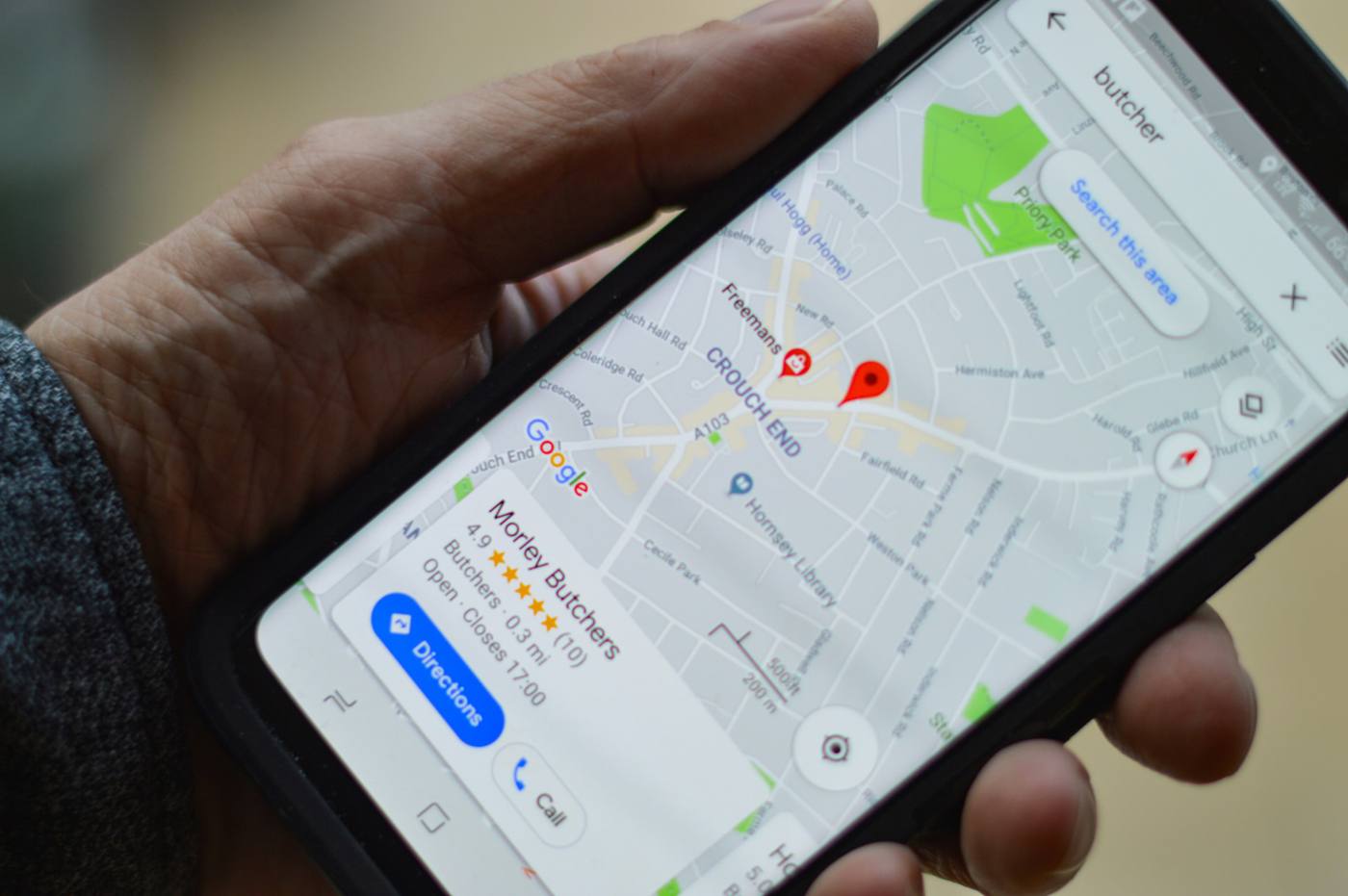
Local SEO is the practice of optimizing your online presence so that people searching for your type of business nearby actually find you, not just anyone. It covers four things working together: your Google Business Profile, your website, your reviews, and the consistency of your business information across directories and citation sites. Get those four right, and Google has enough confidence in who you are, where you are, and how good you are to put you in front of the people searching for you.
(Notice that last part doesn't actually require you to be good, just to look sufficiently trustworthy on paper. We don't make the rules. We just know them.)
That's the short version. The longer version is that local SEO exists because Google realized, a long time ago, that a huge share of searches aren't looking for information, they're looking for a business to call. "Emergency plumber," "HVAC repair near me," "chiropractor open now." Local SEO is the set of practices that determine whether your business is one of the answers Google gives.
Local SEO vs. Traditional SEO
Traditional SEO and local SEO overlap, but they're not the same discipline, and treating them as identical is one of the most common mistakes local service businesses make.

| Traditional SEO | Local SEO | |
|---|---|---|
| Primary target | Organic results, nationwide or global | Map pack + geographically filtered results |
| Key ranking factor | Content authority, backlinks | Google Business Profile, proximity, citations |
| Where customers convert | Blog posts, landing pages | GBP profile, map pack, phone calls |
| Competition set | Anyone ranking for the keyword | Businesses physically near the searcher |
| Typical searcher intent | Research, comparison, informational | Ready to call or visit, often same-day |
A national e-commerce brand cares almost entirely about the left column. A plumber, electrician, dentist, or landscaper cares almost entirely about the right one. If you're a service business paying for generic SEO advice written for the wrong column, that's often the whole problem.
Why Local SEO Matters So Much for Service Businesses
Here's the part that should get your attention if it hasn't already: 46% of all Google searches have local intent. That's not a niche slice of traffic, it's roughly half of everything typed into the search bar. And local searchers move fast: 76% of people who search for something nearby on their phone visit a business within a day, and 28% of those searches end in a purchase, according to Google's own data.
Now here's the part that should get your attention for a different reason: 58% of companies don't optimize for local search at all, according to ReviewTrackers. That means well over half of your competitors have simply left this table. Every unclaimed Google Business Profile, every inconsistent listing, every business that never bothered to ask for reviews, is a competitor voluntarily removing themselves from consideration.
That combination, huge intent plus widespread neglect, is why local SEO tends to be one of the highest-leverage things a service business can invest in. You're not fighting for scraps in an oversaturated channel. You're often competing against businesses that never showed up to compete at all.
Who Actually Needs Local SEO
Not every business benefits equally, and it's worth being honest about that up front. Local SEO is built for businesses that serve customers in a defined geographic area: trades, home services, health and wellness practices, auto shops, restaurants, salons, pet services, anyone whose customer has to be physically near them, or willing to travel a reasonable distance, to do business.
It matters less for a pure e-commerce brand shipping nationwide, or a SaaS company with no local footprint at all. Those businesses need SEO too, just a different flavor of it, weighted toward the traditional SEO column in the table above rather than the local one.
If customers in your area search for what you do before they call you, and most service businesses fit that description, local SEO belongs in your marketing plan. If they don't, it's fine to skip it and put the budget somewhere that actually matches how you get found.
The Core Components of Local SEO
Local SEO isn't one lever, it's several working together. Neglect any one of them and the others have to work harder to compensate.
Google Business Profile
Your GBP alone accounts for roughly 32% of local pack ranking influence, according to Whitespark's annual ranking factors survey. Category selection, business description, photos, posts, and completeness all feed into it. We cover the full checklist in our GBP optimization guide.
On-Page SEO & Citations
Title tags, schema markup, and consistent name-address-phone data across directories tell Google your business is real, current, and trustworthy. Inconsistent citations are one of the quietest local ranking killers, because they're invisible until someone actually audits them.
Reviews
Review count, recency, and response rate are direct ranking signals, not just a trust factor for customers. 80% of consumers are more likely to use a business that responds to every review (BrightLocal). We go deeper on this in why reviews matter for local rankings.
Website Conversion
Ranking well only matters if the click turns into a call. A slow, generic, or confusing website loses the decision a searcher just gave you the chance to win.
AI & LLM Search Readiness
Increasingly, the search happens inside ChatGPT or a Google AI Overview instead of a traditional results page. Structured data and consistent business information determine whether AI tools can confidently recommend you. See what AI search optimization actually involves.
Local SEO by Industry: What Actually Changes
"Local SEO" gets talked about as one uniform practice, but the specifics shift meaningfully by trade. Search intent, sales cycle, and customer lifetime value are all different enough that a generic local SEO playbook underperforms a trade-specific one.
- ✓HVAC carries the highest average customer lifetime value of the trades we track, and search demand splits between same-day emergency repair and multi-week replacement research. See our Indianapolis HVAC SEO Agency page for how that changes the strategy.
- ✓Plumbing runs one of the fastest sales cycles in local service, often closing in days with a 12 to 15% lead-to-customer conversion rate. Our Indianapolis Plumbing SEO Agency page breaks down what that means for map pack strategy.
- ✓Pest control shares plumbing's fast-closing profile, with the added twist that a single visit often converts into a recurring treatment plan. Our Indianapolis Pest Control SEO page covers the recurring-revenue math.
The pattern holds beyond these three: a chiropractor's local SEO strategy should look different from a roofer's, which should look different from a groomer's. If your current SEO plan treats every service business the same, that's usually a sign it was built for nobody in particular.
How Long It Takes and What It Costs
Google Business Profile improvements can move the needle in 4 to 8 weeks. Fuller organic ranking movement typically takes 3 to 6 months of consistent work, and results compound from there rather than resetting like paid ads do. We wrote a full breakdown of the timeline question, since it's consistently the first objection we hear, in how long local SEO actually takes.
On cost: agency retainers for local SEO commonly run $1,500 to $3,000 or more per month. HereFirst's plans start at $397/mo after a one-time setup fee, built specifically to close the gap between what local service businesses actually need and what the traditional agency market charges for it. Full pricing is on our services and plans page.
We run local SEO campaigns across the metro, including Fishers and Carmel. And if you're weighing link building as part of the plan, read do nofollow links help SEO.
Common Local SEO Mistakes Service Businesses Make
- ✗Leaving the Google Business Profile unclaimed or barely filled out
- ✗Using inconsistent business name, address, or phone number across directories
- ✗Treating reviews as an afterthought instead of an ongoing system
- ✗Building a website with no clear path to a call or a booking
- ✗Ignoring how AI assistants and voice search now surface local recommendations
- ✗Expecting results in weeks and abandoning the effort right before it compounds
Almost every one of these is a discipline problem, not a knowledge problem. None of it is complicated. Most of it just doesn't get done.
Frequently Asked Questions
The Bottom Line
Local SEO is what determines whether your business is one of the answers Google gives when a nearby customer is ready to call. Nearly half of all searches carry local intent, and more than half of local businesses have effectively opted out of competing for it. That gap is the opportunity.
Start with your Google Business Profile, build a real review system, make sure your website gives people a reason to trust you and an easy way to reach you, and structure your online presence so AI tools can find you too. None of it is a secret. Most of it just doesn't get done consistently, which is exactly why the businesses that do it tend to win.
(Being genuinely great at your job still matters, obviously. Customers notice. Google, bless it, mostly doesn't, at least not until you've handed it a reason to.)